Ownership & business value
Own the outcome, not the ticket. Then turn what you learn in the field into product.
Roadmap: Client simulation & ownership, Interview readiness & senior judgment
Why it matters
A software engineer makes the product correct. A solutions engineer shows that it fits. An FDE makes it work inside one customer's real environment and proves the value. That last part, owning a measurable outcome, is what gets FDEs trusted with bigger accounts and what interviewers listen for in every behavioural story.
What it's made of
- Napkin ROI math a CFO would accept
- Success criteria written as acceptance tests
- First-person ownership stories with numbers
- Spotting the general product need behind a custom request
- Product-feedback memos the roadmap team can act on
- Value reviews that lead to expansion
- Not committing to things engineering hasn't agreed to
Keep a deployment log
For every deployment, write down the problem, the baseline, what you built, what broke, what you decided and why, and the measured result. It takes ten minutes a week. It becomes your interview stories, your case studies and your best product feedback, all with real numbers attached.
Tell ownership stories properly
A strong behavioural answer follows a clear arc, told in the first person:
- Situation: the customer, the stakes, and why it was hard.
- How you clarified the real problem.
- What you decided, and the trade-off you accepted.
- What you personally did (not the team).
- The measured result.
- What you'd do differently now.
Deliver, prove, expand
Expansion follows proof. After a pilot, run a short value review with the sponsor: here was the baseline, here's the result, here's what users say, here's the next workflow worth doing. That conversation, grounded in their numbers, is how one deployment becomes five.
Feed the field back into the product
When three customers ask for the same workaround, that's a product feature. Write a short memo: the request, who asked, how often, what they do today, the cost of not solving it, and a suggested approach. FDEs who do this consistently end up shaping the roadmap.
Mid-level looks like
Owns their deliverables end to end and follows up without being chased.
Senior looks like
Owns measurable deployment outcomes, shapes the product roadmap with field evidence, and knows what not to build.
Common pitfalls
- Stories told as "the team did…" with no clear personal contribution.
- Promising a feature on a customer call that product hasn't agreed to.
- Treating go-live as the end, then never checking whether value arrived.
Practice drills
Drill 1
Rewrite three of your resume bullets in outcome-and-ownership language, each with a number.
A strong answer: First person, a measurable result, and a clear sense of what you specifically did.
Drill 2
Write a product-feedback memo for one request you've seen from three different customers.
A strong answer: Evidence from each customer, the cost of the workaround, a generalised version of the need, and a suggested approach.
Drill 3
Tell the story of a time you talked a customer out of what they asked for. Keep it under three minutes.
A strong answer: The evidence you used, how you kept the relationship, what they ended up with, and the result.
Watch path
Play all · 4 videos · 96 min- 1Forward Deployed Engineering 101 — Kevin Bai, Anthropic, ex Palantir & Rippling Founding FDE18 min
- 2How Palantir Scaled: Why the Best Software Is Built Backwards20 min
- 3How Forward Deployed Engineering is done at Cognition — Jia Wu18 min
- 4Colin Jarvis | Head of Forward Deployed Engineering at OpenAI: Trust. Product. Impact.40 min
Best resources for this skill
Repos, courses, articles and podcasts, ranked by how much they teach.

Read next

Solutions Architect's Handbook
Saurabh Shrivastava, Neelanjali Srivastav
A broad tour of the architecture choices you will be asked to defend on customer calls (cloud patterns, security, data, migration, cost), written from the solutions architect seat, which overlaps heavily with the FDE one.
The Forward Deployed Engineer
Paden Gayle · 2027
An upcoming O'Reilly book dedicated to the FDE role, by Paden Gayle, a founding FDE. It isn't released yet; watch for the early-release chapters.

The Philosopher in the Valley
Michael Steinberger
A reported history of Palantir, the company that created the forward deployed engineer. Read it to understand why the role exists, how it was meant to work, and what tradeoffs Palantir made by embedding engineers with customers.
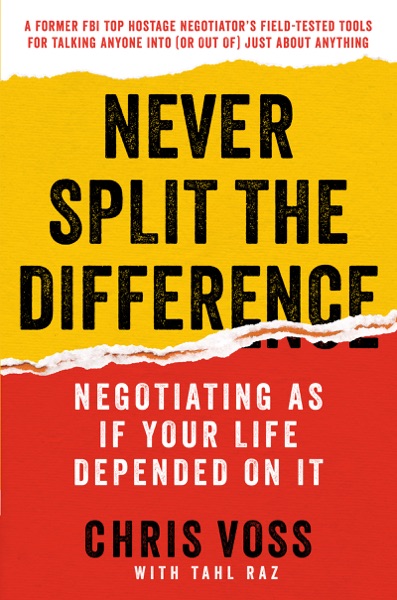
Never Split the Difference
Chris Voss, Tahl Raz
Negotiation tactics from a former FBI hostage negotiator, centred on tactical empathy, labelling and calibrated questions. Useful for scope negotiations, timeline pushback and tense escalations with customers.